

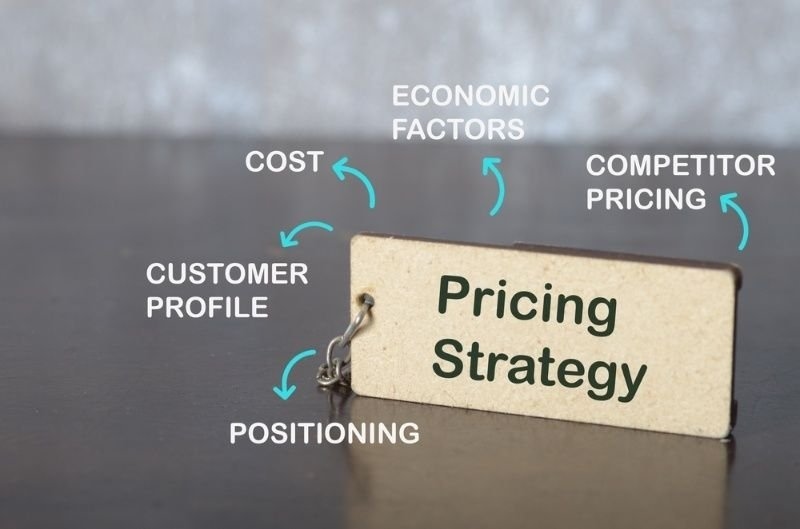
Honestly, deciding what to charge might be one of the hardest parts of running a small business. The price is too low, and you're leaving cash on the table, maybe even losing money without realizing it. Price too high, and people bail before they even test the product out. The right pricing strategies help you land that middle ground, so you’re still making a fair profit, but customers kind of leave with that “yeah, ok, this makes sense” feeling.
Simply put, a pricing strategy is how you land on a number for what you're selling. It factors in your costs, what competitors charge, and how much value your customers think they're getting. A decent strategy should back up whatever you're actually trying to achieve, be it faster growth or better margins.
Before locking anything in, work out your break-even point first, since that's the floor you can't go below. Once you know that, layer in the profit you want and see how it stacks up against similar businesses nearby. Skip this step, and you're basically pricing by gut feel, which rarely ends well.
There's more than one way to price a product, and the types of pricing strategies out there really depend on what you sell and who you're selling to. Here's a quick table to break it down.
The cost-plus pricing strategy is about as simple as it gets. You add up what it costs to make your product, then stick a markup on top for profit. That's it, really. It suits businesses where costs stay fairly steady from month to month.
The problem is, it doesn't care what your competitors charge or whether customers think your product's worth that much. You could build something genuinely great and still get the price wrong, purely because the math never accounted for the market at all.
With a competitive pricing strategy, you set your price by looking at what similar businesses are charging. You can go above, below, or right in line with them, depending on your goals. Charging a bit more can work if you've got something extra to offer, like better service or more convenience.
Pricing below the competition, sometimes called the loss-leader move, gets people in the door, hoping they'll spend more later. Printer companies have basically built an entire business around this trick. Cheap printer, expensive ink—you've probably noticed.
A value-based pricing strategy prices things according to what customers believe they're worth, not just what they cost to produce. This tends to suit premium or niche brands with a strong sense of identity. Think luxury goods or specialized services people can't easily find elsewhere.
Making this work takes marketing that actually explains why your product deserves the higher price tag. Customers don't just hand over more money because you asked. They need a reason to believe it.
Penetration pricing gets you into a market quickly by launching with prices that almost feel like a mistake. Once you've built up a loyal base, prices slowly climb toward something more sustainable long-term. Price skimming flips that idea, starting high and coming down gradually as demand shifts to more budget-minded buyers.
Both approaches depend heavily on timing. Move too fast either way, and you risk burning through the trust you've spent time earning.
Must Try: Business Networking Tips to Build Meaningful Career Success
Sometimes, a real pricing strategy example just makes more sense than any textbook definition. Take a small furniture workshop that hand-builds every piece and prices things using basic cost-plus math. Materials, labor, and overhead are all totaled up, with a markup added for profit at the end.
Now think about a software startup instead. It might launch with penetration pricing, charging next to nothing just to get people hooked on the product. Once users see the value, prices go up, and most stick around anyway because switching feels like more hassle than it's worth. Subscription boxes lean on something similar, offering a free basic version before nudging you toward the paid plan.
Every pricing strategy example out there really comes back to one idea: your price needs to fit your product, your audience, and wherever your business happens to be right now.
Even people who've run businesses for years still fall into pricing mistakes that quietly drain their profit. Here are the ones worth keeping an eye on.
Steering clear of these pricing mistakes doesn't take much, just a habit of checking your numbers against your costs, your competitors, and what customers are actually telling you.
If you’re wondering how to raise prices without losing customers, start with timing and be straight up about it. Give people some advance warning instead of tossing a surprise charge at them out of thin air. Then lay it out clearly, what exactly changed—maybe improved materials, newer features, or costs on your side that simply went up?
You might also consider grandfathering loyal customers into their old rate for a while. It softens things and shows you actually appreciate the people who stuck around. Small increases spread out over time tend to land much easier than one big jump all at once.
Where you can, tie the price bump to something customers can actually see or feel. When people notice a real improvement, a higher price feels earned rather than random.
Choosing among different pricing strategies isn't something you do once and forget about, as much as we might wish it were. It's more of an ongoing habit, checking your costs, keeping an eye on competitors, and staying close to what your customers actually want. Build that rhythm, and pricing stops being a guessing game and starts genuinely working in your favor.
Also Read: How to Measure Content Marketing ROI and Prove Its Value
It's really just how you decide what to charge people. You think about what it costs you to make the thing, what everyone else is charging, and what customers actually feel it's worth, then you land somewhere that keeps you afloat without turning people away.
Honestly, most new businesses just start with cost-plus because it's the least confusing option when you're figuring things out. Some go the penetration route instead, pricing low at first to pull people in, then slowly raising it once they've earned some trust and a bit of market share.
Twice a year works fine for most small businesses; nothing fancy needed. But if your costs suddenly jump, or a competitor changes things up, don't just sit on it. Checking in every so often stops small pricing mistakes from quietly turning into bigger problems down the road.
Yeah, honestly, most businesses end up doing this whether they plan it or not. Maybe your premium stuff runs on value-based pricing while your everyday products stay competitively priced. There's nothing wrong with mixing it up; it just means you're meeting different customers where they actually are.
Not really, no. It's less about the price going up and more about how you handle it. Give people a heads up, explain why, keep the jump reasonable, and most loyal customers stick around. It's the sudden, unexplained increases that actually make people start shopping elsewhere.
This content was created by AI